Shoe Cabinet Singapore Guide: Sizes, Materials, Prices and Delivery
Compare shoe cabinet sizes, materials, prices and delivery options for HDB and condo homes in Singapore, with practical buying guidance.
- What size shoe cabinet should I buy for an HDB or condo in Singapore?
- How much space do I need in front of a shoe cabinet for doors and delivery?
- Is solid wood or engineered wood better for a shoe cabinet in Singapore’s humidity?
- How do I choose a shoe cabinet that actually fits my family’s footwear?
- What features make a shoe cabinet easier to use every day?
- How much should a shoe cabinet cost in Singapore?
- Where can I buy or place a shoe cabinet in different Singapore homes?
- How do I avoid cheap hinges, uneven shelves and other hidden problems?
- Should I buy a ready-made shoe cabinet or commission a custom one?
What size shoe cabinet should I buy for an HDB or condo in Singapore?
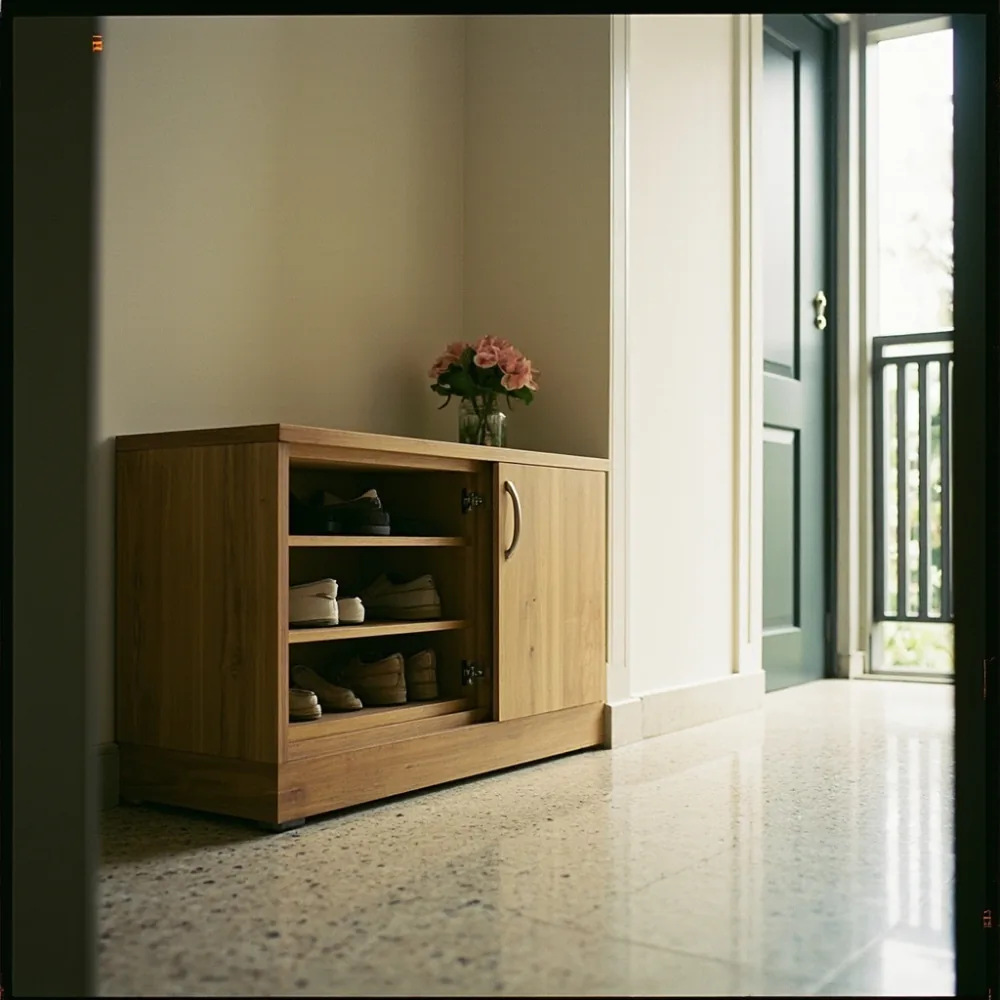
Measure your available space before browsing
Match cabinet depth to your shoe storage
Compare practical capacity
I start with the floor space, not the catalogue. In many HDB B flats, the entrance may only have a 90 cm-wide recess or a narrow wall beside the kitchen, while a larger condo entry can support a long, low cabinet. Measure the skirting board, sockets, door swing and any existing shoe rack before choosing a size.
Useful dimensions for a Singapore entrance include:
- 60–80 cm wide: suitable for a compact HDB foyer, with capacity for roughly 12–18 pairs depending on shelf spacing.
- 90–120 cm wide: a better family option, often holding 20–30 pairs.
- 120–180 cm wide: practical for larger HDB or condo entrances where one cabinet should organise the whole household’s footwear.
- 30–35 cm deep: usually enough for slippers and everyday shoes; 40–45 cm is preferable for bulky trainers or boot storage.
Allow at least 5 cm of clearance from a wall for ventilation and cleaning. If the cabinet is freestanding, leave enough room to open the door without hitting a wall or blocking the main route from the lift.
| Cabinet size | Approx. weight | Typical price in SGD | Best for |
|---|---|---|---|
| 80 × 30 × 100 cm | 28–35 kg | 180–350 | Compact HDB foyer |
| 100 × 35 × 120 cm | 38–48 kg | 300–650 | Couples and small families |
| 150 × 40 × 120 cm | 52–70 kg | 550–1,100 | Larger condo or main entrance |
| 180 × 45 × 140 cm | 75–95 kg | 900–1,800 | High-volume household storage |
These are planning ranges rather than fixed specifications. A wider cabinet can hold more shoes, but it also becomes heavier to move and more difficult to deliver through a lift or staircase.
How much space do I need in front of a shoe cabinet for doors and delivery?
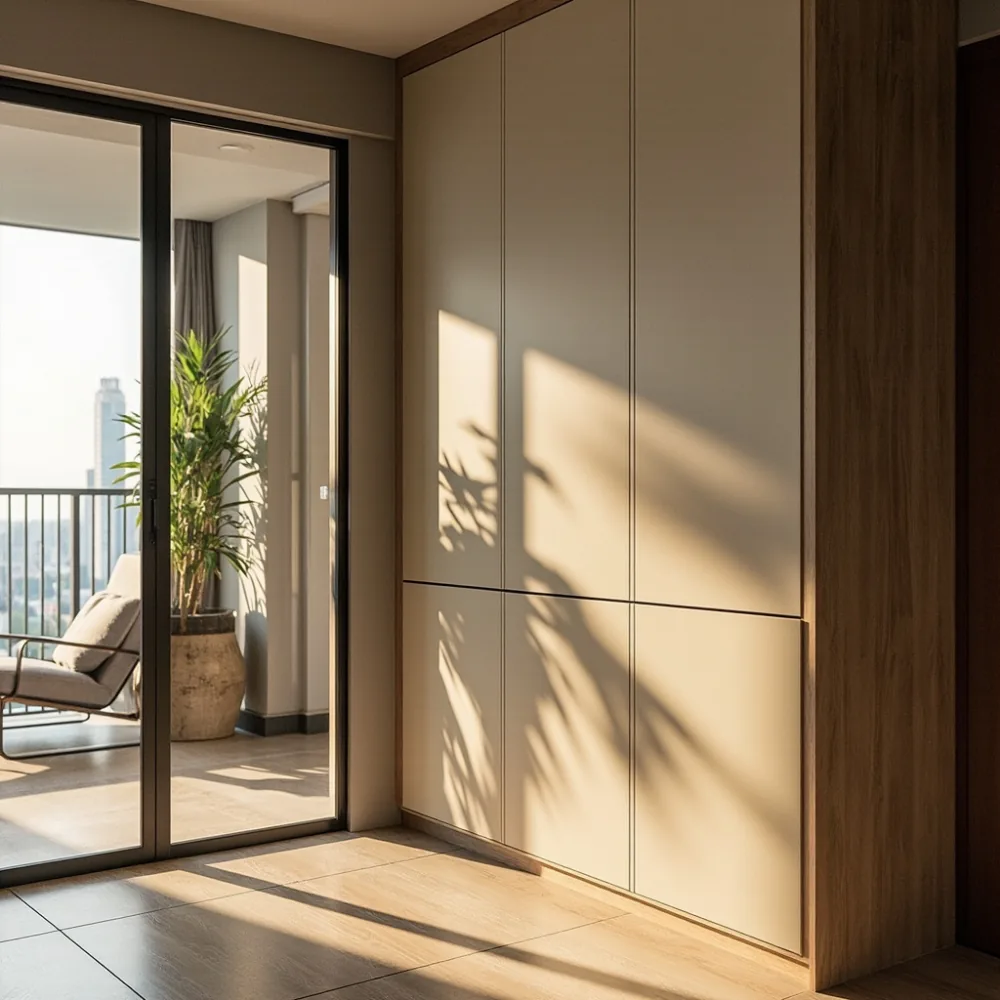
Check the installation route
Allow for door opening and daily access
Plan for delivery day
A shoe cabinet that fits the floor but cannot be installed is not a good purchase. In an HDB block, delivery crews may need to negotiate with building management, reserve a parking bay or use the service lift. Older blocks can have narrower corridors, tighter turns and stairs, so the cabinet’s largest packed dimension matters as much as its finished width.
- Leave 70–90 cm of front clearance for hinged doors, or confirm that sliding doors work in the available space.
- Keep at least 10–15 cm between the cabinet and an adjacent wall if it has a flip-down drawer or pull-out shoe rack.
- Check whether the lift door and cabin measurements can accommodate the package. Ask the retailer for packed dimensions and the number of cartons.
- For upper-floor HDB homes without direct lift access, confirm whether stairs and landing turns are included in the quoted delivery service.
I would photograph the route before ordering: entrance, corridor, lift lobby and lift interior. If the cabinet is being delivered to a condo, check loading bay hours, parking charges and whether the building requires a move-in booking or protection of common areas.
Allow 1–3 days for a standard Singapore delivery once the item is ready. Made-to-measure or solid-wood pieces commonly take 3–8 weeks, while a customised built-in unit may require 4–10 weeks for fabrication, finishing and site installation. A clear site can make the whole process less stressful.
Is solid wood or engineered wood better for a shoe cabinet in Singapore’s humidity?
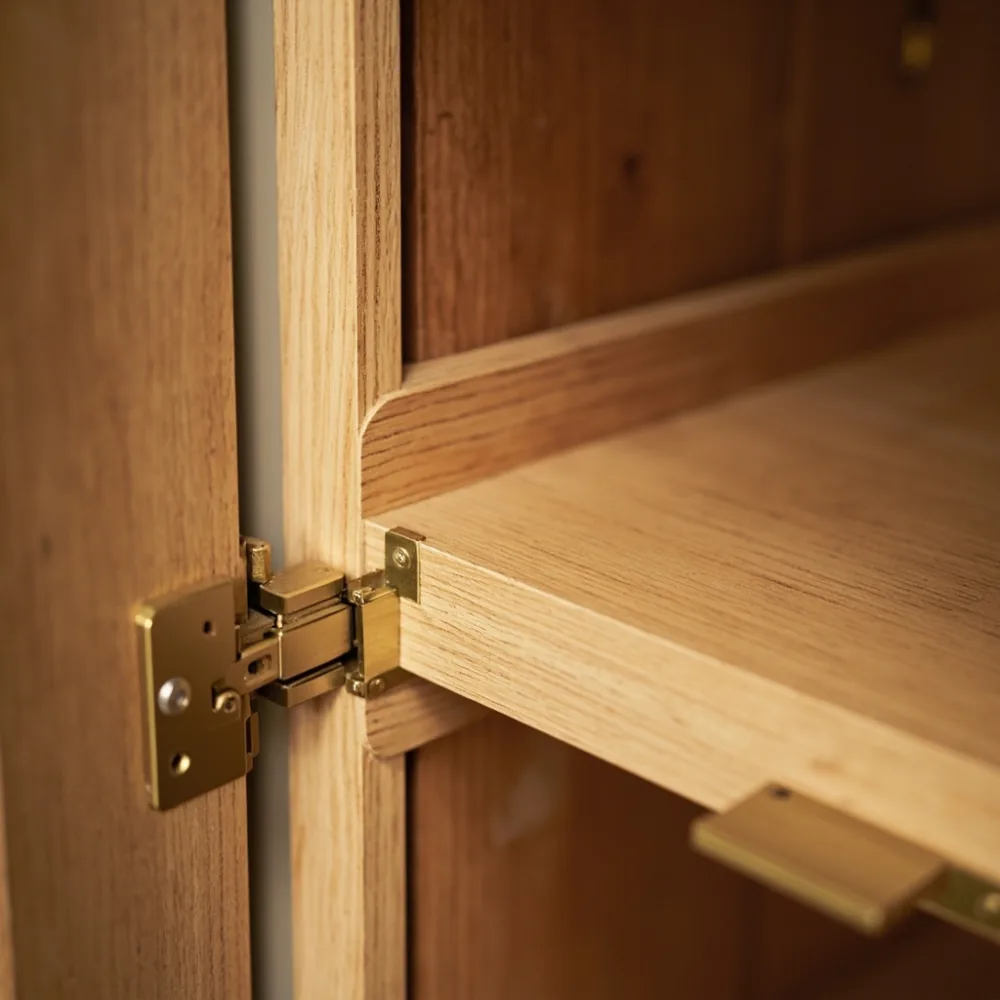
Compare common cabinet materials
Understand Singapore humidity
Choose a finish that suits your home
Singapore’s humidity makes material and finish more important than appearance alone. I have seen solid wood expand slightly through humid periods and contract when air-conditioning cools the home. That is normal, but a well-made cabinet should have stable joinery, sealed edges and a finish that can tolerate everyday dampness.
- Solid wood: sturdy, repairable and visually substantial; ask whether the panels are kiln-dried and whether the warranty covers structural defects rather than ordinary movement.
- MDF or plywood: useful for painted or veneered designs and often more dimensionally steady; it still needs protection from standing water.
- Metal: durable and easy to wipe, although it can show fingerprints, scratches and condensation at the base.
- Plastic or resin: lightweight and water-resistant, but less attractive for a main entrance and less suitable for heavy custom furniture.
For solid wood furniture, look for a water-based or low-VOC coating, sealed drawer bottoms and ventilation gaps. Avoid placing a cabinet directly against a wet laundry wall or under an open window where rain can enter. If you choose timber, keep footwear on a washable tray and wipe the base after mopping.
MIDHILL is a Foshan solid-wood furniture maker established in 2008, with a 10-year structural warranty. That structural cover is one part of the decision, but I would still check the exact timber, finish, drawer mechanism and after-sales terms in writing.
How do I choose a shoe cabinet that actually fits my family’s footwear?
Count pairs by category
Compare shelf layouts
Avoid wasted storage
The number of pairs in a catalogue is less useful than the way the cabinet uses space. I count everyday shoes, work shoes, sports shoes, sandals and boots separately. A family of three may own fewer than 30 pairs but need a larger cabinet if boots take up full shelf height or if slippers need to be stored near the door.
- For 10–15 pairs, choose two or three fixed shelves with roughly 20–25 cm of vertical space.
- For 20–30 pairs, use four or five shelves, with one adjustable shelf for boots or taller footwear.
- For 30–40 pairs, look for double-height sections, angled shelves or a combination of hanging rails, drawers and lower cubbies.
- Place frequently worn shoes between 60–120 cm above the floor to avoid bending unnecessarily.
Check the maximum shoe length and width. Children’s shoes need little depth, while basketball shoes, running shoes and bulky sandals need more room than many slim cabinets offer. A cabinet marketed as “15 pairs” may hold only small footwear when the shelves are evenly spaced.
Drawers are useful for insoles, laces and shoe-care items, but they reduce the space available for shoes. Sliding doors save projection space; hinged doors are often easier to ventilate. In a compact HDB home, that trade-off can determine whether the cabinet works at all.
What features make a shoe cabinet easier to use every day?
Look for practical ventilation
Test the hardware
Consider lighting and removable parts
I prioritise features that reduce friction: soft-close doors, rounded corners, adjustable shelves and a toe-kick that keeps shoes from touching the floor. A ventilated back or side panel helps moisture escape, especially for leather shoes and in Singapore’s warmer entry areas.
- Soft-close hinges: useful in a small corridor where a sudden door movement could hit a person or wall.
- Adjustable shelves: helpful when household footwear changes.
- Removable trays: make cleaning easier and protect timber from grit.
- High handles: easier to reach for children or older users, though they should not protrude into a walkway.
- LED lighting: can make a dark condo foyer more welcoming, provided the electrical cable is concealed and the light is warm rather than harsh.
For durable furniture, test the drawers and doors in person if possible. They should move smoothly, close without rubbing and remain aligned when loaded. Check the warranty for hinges, drawer runners and surface finish separately from the cabinet’s structural warranty.
Do not overdesign the entrance. A cabinet with too many compartments can become a catch-all for keys, bags and unopened parcels. I prefer one clear purpose, a visible tray and enough open space around the unit for cleaning.
How much should a shoe cabinet cost in Singapore?
Set a realistic budget
Compare material and size fairly
Include delivery and assembly
A useful shoe cabinet Singapore budget starts around SGD 150–250 for a compact model, while a good-sized entry cabinet often falls between SGD 350–800. Solid-wood units, made-to-measure sizing and premium hardware can raise the total to SGD 900–2,000 or more.
| Type | Typical price in SGD | Material | Expected service life |
|---|---|---|---|
| Basic open rack | 80–180 | Painted metal or engineered board | 5–10 years |
| Standard closed cabinet | 250–600 | Engineered board, veneer or metal | 8–15 years |
| Solid-wood cabinet | 600–1,500 | Solid timber with sealed finish | 15–25+ years |
| Custom built-in cabinet | 1,200–3,000+ | Timber, veneer or mixed construction | 15–25+ years |
Compare the quote by dimensions, material, finish, hardware, delivery and assembly—not by the headline price alone. A seemingly cheaper unit may not include lift delivery, stair carry-in, removal of packaging or on-site alignment. For custom furniture, a site measurement can prevent expensive changes later, particularly in older HDB corridors or condos with irregular walls.
I also check whether the seller provides replacement shelf pins, adjustable feet and spare hardware. Small parts are inexpensive individually but awkward to source once a cabinet has been installed for several years.
Where can I buy or place a shoe cabinet in different Singapore homes?
Use the entrance without blocking movement
Compare HDB and condo layouts
Keep delivery access clear
The entrance is usually the most convenient location because shoes are removed there, but it must not become an obstruction. In an HDB flat, a narrow foyer beside the lift or dining area may work better than a corridor. In a condo, a built-in wall near the unit entrance can provide more capacity and a cleaner look.
- HDB B flat, compact foyer: a 60–90 cm-wide cabinet or slim bench with a 20–30 cm depth.
- HDB family flat: a 100–150 cm cabinet positioned where it does not interfere with a shoe bench or shoe rack.
- Condo entrance: a fitted 120–180 cm unit, provided the door swing and fire-sprinkler clearance are respected.
- Bedroom or dressing area: suitable for enclosed storage of less-used shoes, provided there is ventilation and floor clearance.
Singapore districts have different building access and parking conditions. For a HDB purchase in Woodlands, Jurong East or Tampines, check service-lift booking and resident parking rules. In central areas such as Novena, Orchard or Kallang, loading bays may be busier, so a timed delivery is sensible. Condo management may also charge a mover’s fee or require a contractor list.
Ask the seller for the cabinet’s packed dimensions before arranging delivery. A unit that looks fine in the flat may not turn easily at the corridor landing, so measure the route rather than relying on the building floor plan.
How do I avoid cheap hinges, uneven shelves and other hidden problems?
Inspect visible quality
Ask specific questions
Record the purchase details
Most disappointing shoe cabinets are not badly styled; they are simply built with weak hardware or poorly finished panels. I look for even gaps, flush doors, smooth edges and shelves that sit flat without rocking. I also open and close every drawer, including the full extension if the design uses one.
- Ask whether the shelves are supported by metal pins, brackets or a routed groove; metal pins are generally easier to adjust.
- Check the back panel for warping, especially in a humid environment.
- Confirm that the cabinet includes adjustable feet for uneven floors.
- Request a sample of the finish or a close-up photograph showing the grain, coating and joints.
- Read what the warranty excludes, including moisture damage, scratches and commercial use.
For a solid-wood purchase, distinguish between a 10-year structural warranty and a general lifetime promise. Structural coverage usually addresses serious defects in the frame or joinery, not a drawer runner that has worn out after normal use. Get the terms in your order confirmation.
Keep the dimensions, finish code and invoice. If delivery assembly is included, record whether the crew has levelled the cabinet, fitted the shelves and checked the doors. A five-minute inspection on delivery day can catch alignment issues before they become household irritations.
Should I buy a ready-made shoe cabinet or commission a custom one?
Choose standard sizing for convenience
Choose custom for awkward spaces
Weigh the lead time
A ready-made cabinet is faster and usually cheaper. I would choose one when the available wall is rectangular, the entrance is wide enough for delivery and the household’s footwear fits standard shelves. Standard sizes are easier to compare, replace and move within the same home.
Custom furniture makes more sense when the space is irregular, the skirting board needs to be followed, or the cabinet must contain boots, golf shoes or a concealed charging point. A built-in design can use the full wall, but it should still have removable shelves and accessible fixings so it does not become a permanent obstacle during cleaning.
- Ready-made: roughly 5–14 days for delivery after the item is in stock.
- Made-to-order: commonly 3–6 weeks, depending on finish and hardware.
- Custom built-in: usually 4–10 weeks, including site measurement and installation.
Ask custom suppliers for a full-size drawing before fabrication. I check where the hinges and shelves sit, how much clearance remains, and whether the finish will vary across panels. For small space furniture, every centimetre should be documented, not implied in a showroom photograph.
Whatever route you choose, choose the cabinet around the shoes, the room and the delivery route. A handsome design that cannot accommodate boots, cannot be carried upstairs or leaves the entrance unusable will disappoint quickly.
Frequently asked questions
How many pairs of shoes fit in a 100 cm shoe cabinet?
A 100 cm-wide cabinet typically holds about 18–30 pairs, depending on depth, shelf spacing and shoe size. Flat shelves suit slippers and low shoes, while angled shelves may hold fewer pairs but display them more accessibly. Boots need a full-height compartment. Measure your largest shoes before buying.
Can a shoe cabinet be delivered and installed in an HDB flat?
Yes, but confirm the service-lift dimensions, packed carton size, stair carry-in and parking arrangements before ordering. A standard cabinet may be delivered within 1–3 days after stock is confirmed. Installation usually takes 20–60 minutes, though custom built-ins may require a longer on-site fitting.
Is solid wood suitable for Singapore’s humid climate?
Solid wood can work well when it is kiln-dried, properly joined and sealed on all exposed surfaces. Small seasonal movement is normal in Singapore’s humidity. Avoid direct rain and standing water, provide ventilation, wipe the base after mopping and check whether the supplier’s warranty covers structural defects rather than cosmetic wear.
What is the best depth for a shoe cabinet in a small Singapore home?
A depth of 30–35 cm works for most slippers, sandals and everyday shoes, while 40–45 cm gives bulky trainers and boots more room. A shallow cabinet saves floor space but limits what you can store. Confirm the shelf depth and internal clearance rather than relying on the cabinet’s exterior measurements.
How much does a good shoe cabinet cost in Singapore?
Compact closed cabinets generally cost SGD 180–500, larger solid-wood units about SGD 600–1,500, and custom built-ins can exceed SGD 1,200. Compare quoted prices for material, dimensions, hardware, delivery and assembly. Some listings advertise attractive starting prices that do not include lift delivery or on-site installation.
Questions about sizing, fabric or delivery?
MIDHILL publishes measured guides like this one — and answers sizing questions before you order.
See the collection